Wine Watch: This January, try thinking inside the box
Vicky Hampton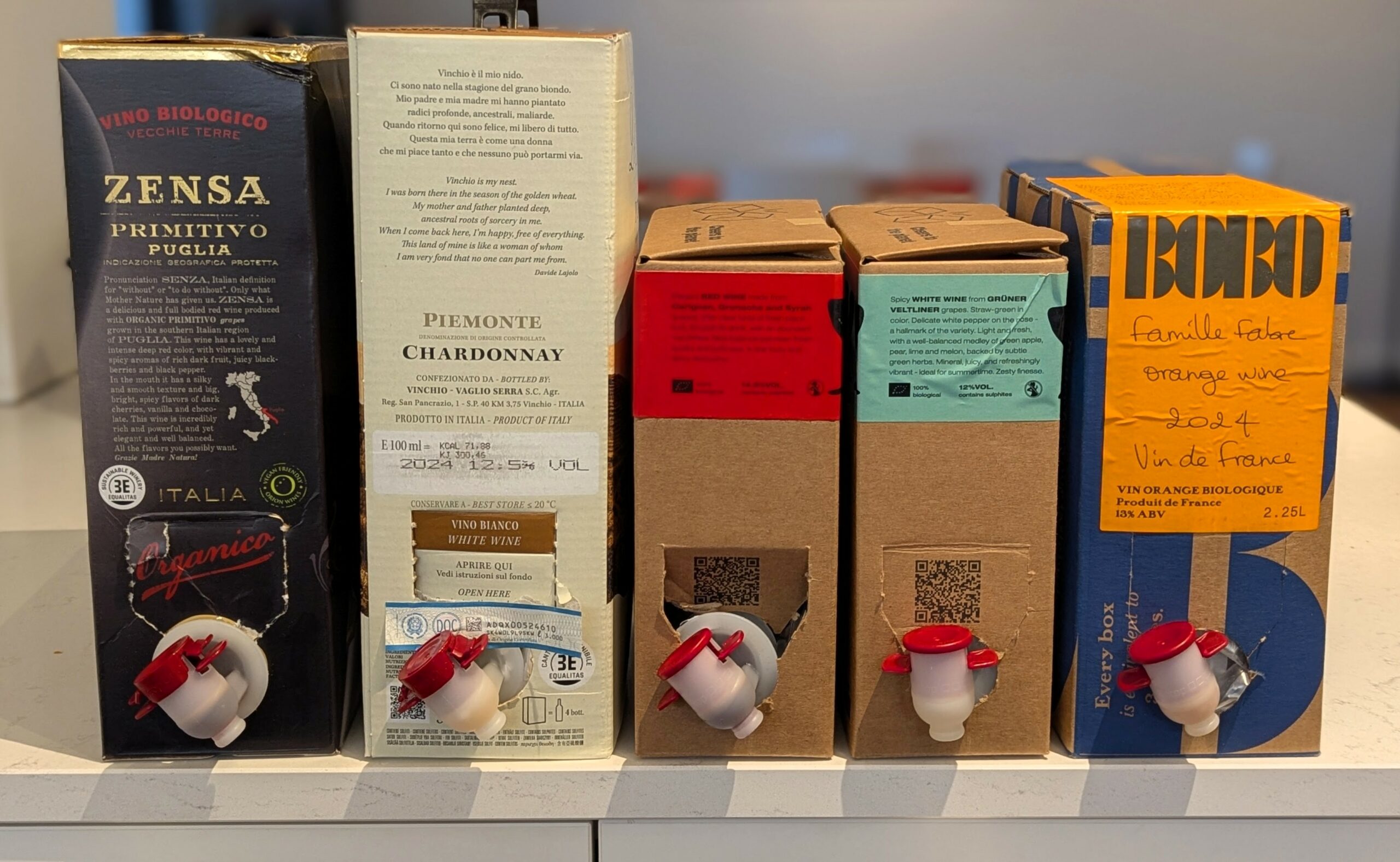
Each month, our resident wine expert, Vicky Hampton, shares her seasonal wine picks for those on a budget and those with a little more cash to splash. While some may be observing Dry January, those of us who are still drinking might be looking to moderate, save money and do something good for the planet. Introducing… box wine!
Bag-in-box wine is having a bit of a moment. If Hannah Crosbie is writing about it in the Guardian, it must be on trend. And we’re not talking about the cheap, student plonk featured in Australian drinking games involving washing lines. I’ve been on a mission to source high-quality, sustainable, easy-drinking wines that even those of us hitting middle age with steady(ish) jobs would be happy to pour of an evening.
Let’s take a look at what makes box wine make sense – and why it’s due an image overhaul.
Everything in moderation
Many wine drinkers are moderating their consumption of alcohol – not just in January but all year round. If you find yourself fancying a glass of wine after work, but knowing you’ll struggle to finish a bottle over a few days, bag-in-box wine could offer the solution.
It might sound counter-intuitive: buying wine in a larger format in order to consume less of it. But boxes of wine at 1.5 litres (two bottles), 2.25 litres (three bottles) or 3 litres (four bottles) will stay fresh for around a month after opening. That’s because the plastic “bladder” surrounding the wine doesn’t allow oxidisation in the same way that an open bottle would. So even if you only drink a glass a night, you stand a better chance of not pouring the dregs down the sink.
Lightweight packaging, lighter footprint
When we consider sustainability in wine, we might think about organic grapes or biodiversity in vineyards. While these are of course important, a vast proportion of wine’s carbon footprint comes from its packaging and transportation.
According to Jeen Akkerman, co-founder of The Wine Pack, packaging wines in a bag-in-box format reduces carbon emissions by 80% compared with glass bottles. That figure has as much to do with the extremely high temperatures required to produce glass bottles in the first place (and to recycle them) as the fact that glass is notoriously heavy and inefficient to transport. It makes sense: plastic and cardboard are far lighter, and their cuboid format stacks compactly and efficiently into trucks for transportation.
Value without compromising on quality
In January in particular, our wallets tend to be feeling the pinch following the festive season. And while I’m not here to make the case for box wine being “cheap”, it does tend to offer good value.
Once again, that’s because much of the cost of wine (especially at the lower end of the market) comes from the bottle it’s packaged in. Put that same wine into more cost-efficient packaging – where the equivalent of two to four bottles fit into one box – and you reduce the price of the wine without reducing the quality. In other words, it’s a win on freshness, sustainability and price.
Busting the cork myth
Several people have asked me whether wines in bag-in-box packaging miss out on the benefits associated with cork-sealed bottles. So let’s spend a moment myth-busting.
While it’s true that wines designed to age benefit from the micro-oxygenation that real corks allow over the course of many years, most wines don’t fall into this category.
Over 90% of all wines made in the world are meant to be consumed within one year of production, which means the presence or absence of a cork will make no difference at all. (That’s also why screw caps and plastic corks are no problem for young, fresh, ready-to-drink wines either.)
So, now that we’ve looked at the arguments for drinking bag-in-box wines in the first place, let’s dive into this month’s recommendations…
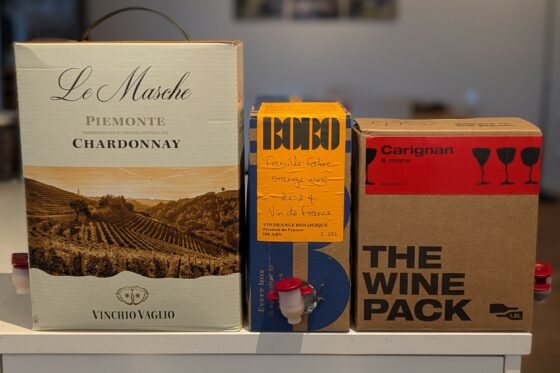
Budget box: Le Masche Chardonnay DOC, Piedmont, Italy 2024
WYNZ: €29.95 for 3 litres = €7.49 per bottle
Bag-in-box specialist WYNZ offers a wide range of good-value wines, many of which hail from Italy. I tasted several, of which this tropical-fruited Chardonnay from Piedmont offers some of the best value for money. It boasts a rich golden colour, pineapple-scented nose and subtle butterscotch and vanilla on the palate. A fresh, friendly wine that would work as well by itself as with a roast chicken with seasonal veg or a salad.
Those who prefer rich reds will also enjoy the Zensa Primitivo from Puglia, featuring ripe black cherries, baking spices and cocoa beans. A warm bath of a wine that’s a classic from southern Italy.
Prime pack: Carignan & More, Minervois, France
The Wine Pack: €22.60 for 1.5 litres = €11.30 per bottle
Father and son duo Jeen and Auke Akkerman founded The Wine Pack to source organic, European wines that fulfil their sustainability goals. Their distinctive packaging design reflects the high-quality, low-impact wines you’ll find inside. Of those I tasted, The Wine Pack’s red blend of Carignan, Grenache and Syrah from Minervois in the South of France offered everything I want in a weeknight wine: fresh acidity, crunchy red fruit, a peppery kick and an elegant finish.
If you’re looking for a light white instead, try the citrusy, fennel-y Grüner Veltliner from Weinviertel in Austria. Or take a chance on the Touraine Sauvignon Blanc – I didn’t taste this one myself but it recently scored an eight from Onno Kleyn in de Volkskrant!
Classy cuboid: Famille Fabre Corbières Orange, France 2024
BOBO Wines: €49 for 2.25 litres = €16.33 per bottle
Based between London and the South of France, BOBO Wines is on a mission to seek out premium, organic wines from small French vignerons. I tried their orange viognier and fell for its beguiling blend of stone fruit flavour, honeysuckle perfume and structured tannins. This is a food-friendly wine that would pair perfectly with powerful, spicy dishes.
Note: When I received the sample, BOBO Wines told me they were in the process of launching in Amsterdam. Their EU webshop has subsequently been delayed, so interested readers should contact BOBO Wines directly to inquire about orders to the Netherlands.
For more of Vicky’s wine recommendations and grape explorations, follow @TrufflesandTannins on Instagram or subscribe to The Wine Edit on Substack!
Thank you for donating to DutchNews.nl.
We could not provide the Dutch News service, and keep it free of charge, without the generous support of our readers. Your donations allow us to report on issues you tell us matter, and provide you with a summary of the most important Dutch news each day.
Make a donation