“The Netherlands cannot deny its role in the Venezuelan crisis”
America’s action in Venezuela cannot be understood without looking at the Netherlands’ historical role in feeding tensions in the region, writes historian Thomas van Gaalen.
On Saturday January 3, tensions in the Caribbean suddenly boiled over. After the United States sank over 20 boats and forcibly boarded several oil tankers, the situation ended in what can only be described as a coup.
The American army bombed important cities and army bases in Venezuela and kidnapped President Nicolás Maduro. In a subsequent speech, Trump even announced that the United States would “run” Venezuela for the foreseeable future.
Unease about the situation had been growing in the nearby islands of Aruba, Bonaire and Curaçao for some time. The Dutch government has now expressed its concern, but the tone so far has been non-committal and cautious. The Netherlands prefers to watch from the sidelines, it seems.
That is an odd and even inappropriate stance, seeing that the Netherlands played a key role in promoting foreign nations’ greed for Venezuela’s crude oil and the subsequent interventions by Western nations in the country’s national politics.
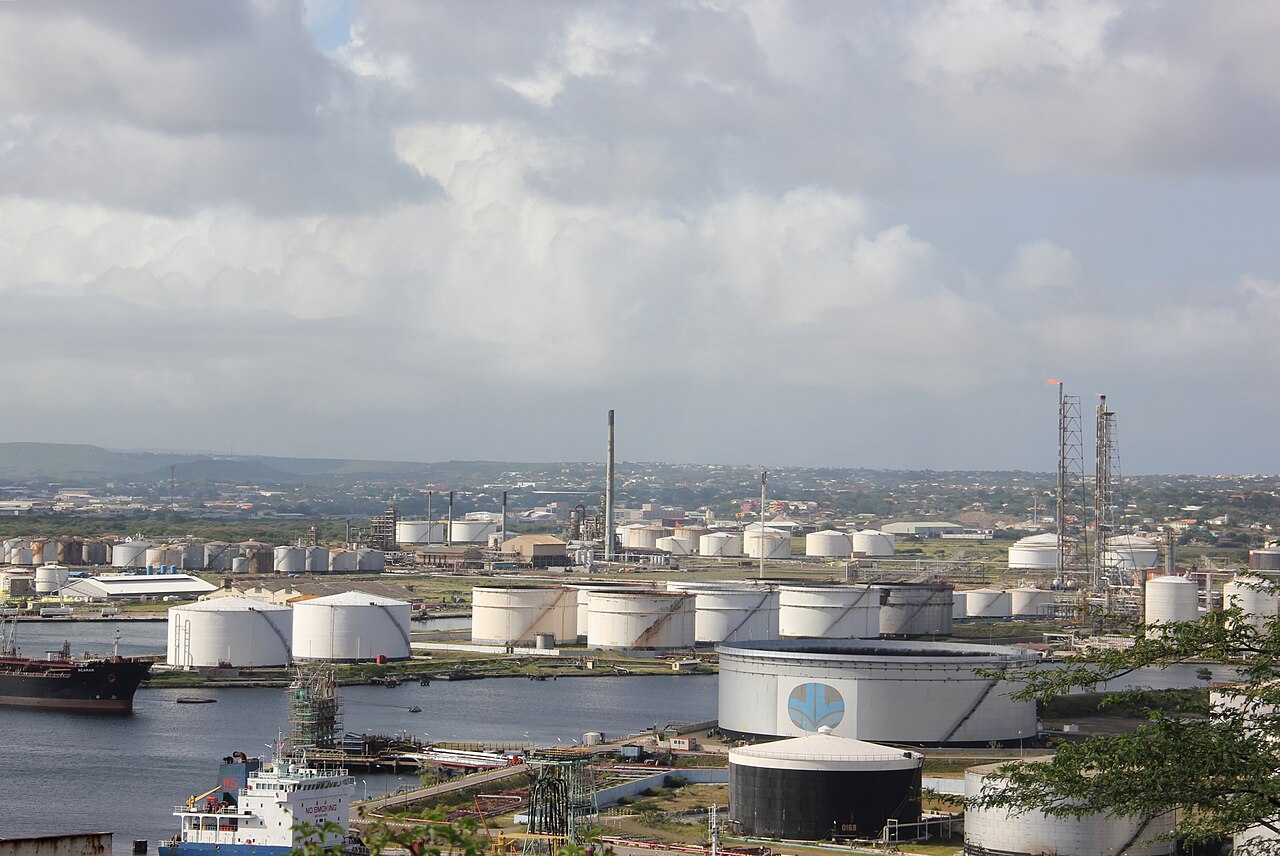
Dutch holiday brochures paint Curaçao as a beach resort, conveniently leaving the steel frame of the oil refinery towering over Willemstad out of the picture. But for a long time, the island was home to one of the biggest oil refineries in the world. Its geographical location enabled the distribution of crude oil from Venezuela to Dutch allies in North America and Europe.
Until well into the 1970s, Dutch owner Shell made huge profits from the insatiable European and American need for oil and the willingness of Venezuelan politicians to trade oil for power and political support. The American oil refinery founded on Aruba in 1928 made for even closer ties between the Netherlands and the United States.
Protecting the oil industry
The two countries often cooperated to safeguard Venezuelan oil reserves, sometimes to the detriment of the region’s population. The oil industry had to be protected and political opposition suppressed at all costs.
Before World War II, the Dutch authorities handed over political refugees, including union officials and campaigners for democracy, who had sought sanctuary in Curaçao to escape the Venezuelan regime. Many ended up in barbaric circumstances in prisons or died during forced labour.
The violence even took place on Dutch colonial soil. In 1929, Venezuelan activist Hilario Montenegro was shot dead in broad daylight on the streets of Willemstad.
When, in that same year, a coalition of Venezuelan and Curaçaoan activists and oil workers mounted an explosive expedition to oust Venezuelan dictator Juan Vicente Gómez, the Dutch colonial regime sprang into action. Aided and abetted by the United States, the authorities rounded up Venezuelan migrants, who were interrogated and deported without legal recourse.
Police also questioned locals who had been vocal about the situation, censorship was tightened and independent political associations and meetings were curtailed even further.
Chávez victory
The election of the left-wing candidate Hugo Chávez in 1999 can be seen partly as a reaction to the prolonged history of intervention and Western hunger for oil. Chávez – Maduro’s predecessor – promised to end poverty and swore to limit foreign intervention.
His government supported ongoing attempts to nationalise the oil reserves, and it didn’t come as a surprise that some of the criticism was aimed at The Hague, which, according to the socialist president, was in league with the United States in an ongoing campaign of “aggression and intervention”.
The current situation is not the same as it was a century ago. Shell left the Caribbean in 1985 and the Dutch government is not as closely involved in the recent interventions in Venezuela as it was in the past.
However, the historic role the Netherlands played in the region should be recognised. The outgoing Dutch government has still not condemned the attack on Venezuela and the abduction of Maduro, both illegal acts, according to human rights experts.
The ABC islands are still home to two American air bases, further strengthening Maduro supporters in their suspicion that the Netherlands is poised for intervention.
Aruba, Bonaire and Curaçao – and not The Hague are being put at risk. Politicians would be wise to recognise the Dutch past of intervention in South America and renounce it once and for all.
This article was first published by the Volkskrant.
Thank you for donating to DutchNews.nl.
We could not provide the Dutch News service, and keep it free of charge, without the generous support of our readers. Your donations allow us to report on issues you tell us matter, and provide you with a summary of the most important Dutch news each day.
Make a donation