The number of explosives attacks on private homes and commercial property remained almost unchanged last year, according to new police figures.
The police said on Friday they have records covering 1,525 incidents, 18 fewer than the year before. Nevertheless, officials say, the total remains unacceptably high.
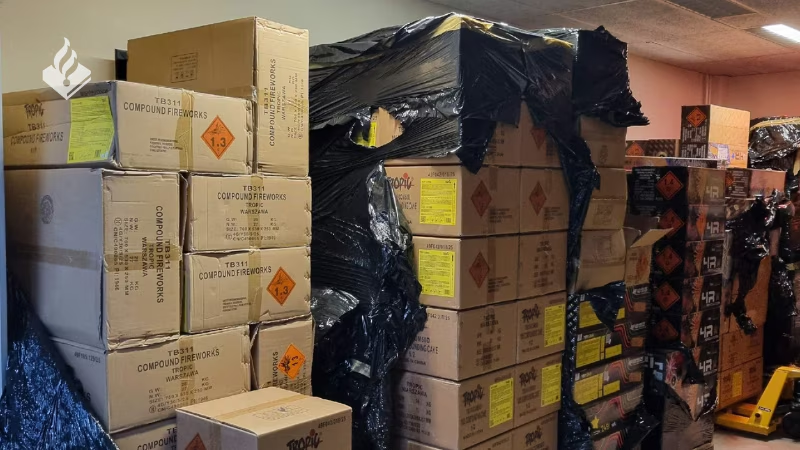
Most of the attacks involved powerful illegal fireworks. In more than 500 cases, the attackers also used fuel by taping fireworks to a bottle of petrol. The combination often causes intense fires and significantly increases the damage.
The police explosives task force said those carrying out the attacks are usually young people who are paid to place the explosives. Many are described as socially or economically vulnerable, and sometimes psychologically fragile, making them easier to recruit.
Efforts to curb the violence are focusing not only on detection and enforcement but also on prevention and aftercare. “Our focus is on the group of underage boys who are easily influenced, but also on the brokers who draw them in,” programme manager Jos van der Stap told broadcaster NOS.
He said recruiters are deliberately targeting certain schools and social housing projects to find young people willing to carry out attacks for money.
Ko Minderhoud, the national police coordinator on fireworks, said the force wants to see a Europe-wide ban on powerful fireworks and explosives.
“We need the producing countries to tackle the entire supply chain together,” he said. “We see that countries such as Poland, the Czech Republic and Italy are willing to work with us and we are pleased the European Commission intends to tighten pyrotechnics regulations.”
Such a campaign, he said, would “significantly reduce the availability of powerful fireworks.”