“Imagining leaving and not coming back here breaks my heart”
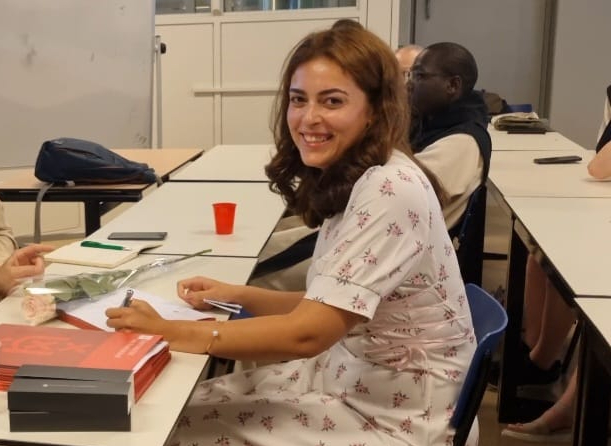
Heba Dakkak fled Syria with her family while a teenager 10 years ago. She now works as an Arabic and Dutch language teacher at Taalhuis in Amsterdam, would like to meet comedian Najib Amhali and is a big fan of Dutch directness.
How did you end up in the Netherlands?
Like many Syrians, I came to Europe during the revolution, which turned into a war. My family fled in 2015 towards the Netherlands. My father came here first and he asked for asylum. Then he got us a visa, so we went to Lebanon, then Turkey, and afterwards we flew to Amsterdam.
So it’s just the basic story of a refugee. Maybe mine is a bit comfortable because I didn’t make the boat trip, but my dad did. This is how we got to the Netherlands and moved to Zwolle.
How do you describe yourself – an expat, lovepat, immigrant, international?
I have been here 10 years now and this is a very good question. There is no one word I can use. Maybe it’s a mix of many of these words, except expat. Of course, I would call myself still a refugee, but I’m also a first-generation immigrant.
How long do you plan to stay?
I don’t actually have a plan. I’ve learned to live day to day and I only make plans maybe for a year ahead and that’s it. I have a dream to eventually go back to Syria because I still love it there. I still love the people, the culture, and the language.
But for now this question seems to me like ‘how long are you planning to stay home?’ because the Netherlands is also home. Maybe I will be here forever or maybe I will go back to Syria after one year. I have no idea.
Do you speak Dutch and how did you learn?
It was very overwhelming in the beginning. I actually started learning Dutch when I was in Turkey while we were waiting for our visa. I started browsing all these websites that teach you Dutch. It went over the present simple, the present continuous, and things like that, but I also watched YouTube and listened to a lot of Dutch songs.
I’m very much in love with learning a language because it gives you keys to the people who speak it. I like to know the people, the culture, and their personalities. My sisters were also very much crazy about learning Dutch. I’m not exaggerating when I say we were learning every single day. We studied, we translated texts, and we memorised words.
But I also read a lot. I started with children’s books, attended language classes, and got a language coach. I spoke a lot, every day, with my neighbours. Maybe it was an advantage to live in a place like Zwolle instead of Amsterdam because people in Zwolle speak English, of course, but they prefer to speak Dutch.
In one year, I reached about a B1 to B2 level and that made me eligible to work toward a Havo school diploma. After that Dutch started feeling easier than English and it felt more natural.
What’s your favourite Dutch thing?
I have a lot of favourite things here in the Netherlands. When it comes to food, I like stroopwafels, kroketten, and bitterballen. Culturally, and maybe this will sound weird, but I love how direct Dutch people are.
Sometimes it’s rude, but I prefer someone to be honest and a little bit rude because in Syria, people do quite the opposite. It confuses me the whole time because now I’m used to the directness, people being honest about things, and being able to just say ‘no’ when I’m not comfortable with something.
I know it’s a genuine compliment when someone gives me a compliment and it’s genuine feedback when I get feedback. In Syria, I can’t tell if someone is being honest with me.
How Dutch have you become?
In some cases, I feel fully Dutch. When I’m around people from other cultures, I feel like I’m very much Dutch in my mentality, at work, or even on a personal level. I now say things that sound Dutch, even in my native language. I translate them into Arabic and people look at me like, ‘what are you saying?’
But when it comes to being generous with guests by making a lot of food after inviting them over or being spontaneous with plans and not putting everything in an agenda, I feel more Syrian. For some things, I feel 100% Dutch, but in other situations I feel 100% Syrian. It really depends and I won’t call myself half this or half that, or 25% this and 75% that.
Which three Dutch people (dead or alive) would you most like to meet?
I would like to meet Rembrandt because his art feels incredibly human and emotional. I would love to understand how he captured people’s expressions so deeply and how he saw the world behind his paintings.
I would also choose Willem van Oranje because he played such an important role in Dutch history. I’d like to ask him how he managed to stay determined during such a turbulent period and what kind of future he imagined for the Netherlands.
And finally, I would love to meet Najib Amhali because he represents modern Dutch culture in a fun and relatable way. His comedy connects people from different backgrounds. I’d be curious to ask him how he finds humour in everyday life and uses it to bring people together.
What’s your top tourist tip?
It’s very basic, but I’d want tourists to see Amsterdam, if they’ve never been to the Netherlands before. I’d also want them to see the Zaanse Schans, but it’s very touristy.
I think it would also be important for them to see the countryside. Places like Zwolle or Drenthe where there aren’t a lot of internationals or expats, but the countryside itself too. The Dutch countryside is one of the best in the world. It’s so calm and beautiful, I love it.
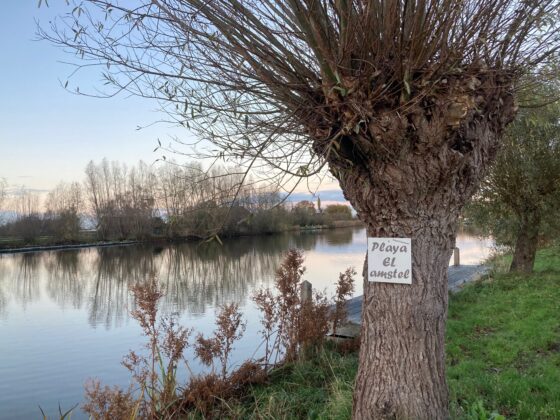
In Syria, we have very beautiful countryside, but there aren’t a lot of services and it’s a bit abandoned. Here, everything is very organised and clean. It would be nice to live there with all that nature, the sky, the fresh and clean air, and all the cycling. It’s amazing.
Tell us something surprising you’ve found out about the Netherlands.
The poldermodel, which was inspired by the building of the dams since we live under the sea level. All these polders (reclaimed land) and dams were built to keep the water out.
I’ve always found this astonishing, especially since they did it such a long time ago and they succeeded. But now the poldermodel refers to Dutch diplomacy where you have to talk a lot and negotiate a lot and reach a consensus.
If you had just 24 hours left in the Netherlands, what would you do?
Imagining leaving and not coming back here breaks my heart. To try and think what I would do with those 24 hours? I would just sit and cry, to be honest.
If I moved to another country, I would have to come back to the Netherlands every month or two to stay here. This country has shaped my identity so much. I can’t imagine my life without the Netherlands or being so far from it.
But if I were to leave, I think the most important thing would be to go to a church. It’s called De Peperbus and it’s the highest place in Zwolle, which is my favourite city in the Netherlands. I would go there, just look over Zwolle, and say goodbye. I hope really, really to never face this scenario ever in my life, but I would want to say goodbye to Zwolle. I love Amsterdam, but Zwolle is number one.
Heba Dakkar was talking to Brandon Hartley.
Thank you for donating to DutchNews.nl.
We could not provide the Dutch News service, and keep it free of charge, without the generous support of our readers. Your donations allow us to report on issues you tell us matter, and provide you with a summary of the most important Dutch news each day.
Make a donation