Wine Watch: A winter celebration of Dutch wines
Vicky Hampton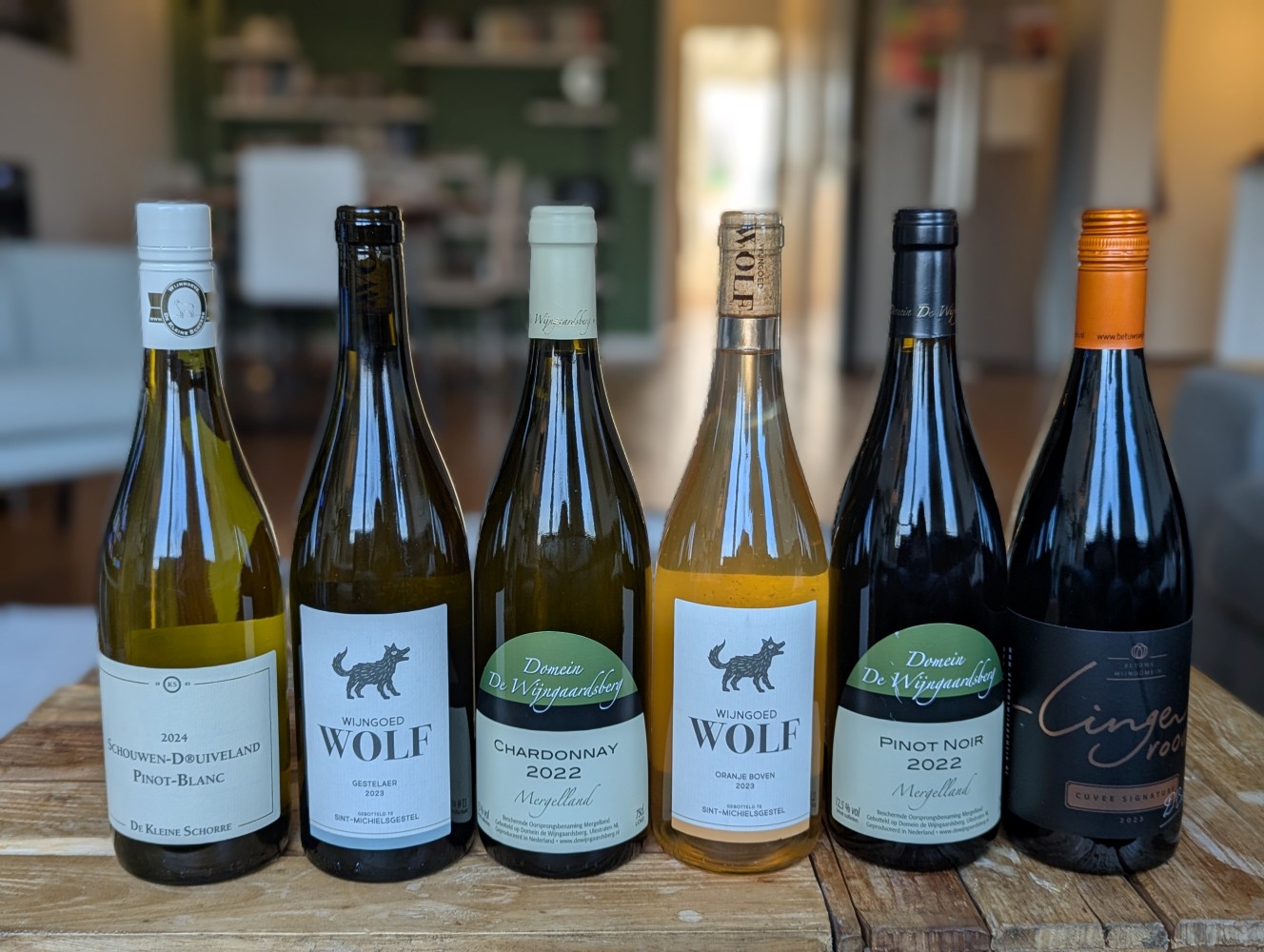
Each month, our resident wine expert, Vicky Hampton, shares her seasonal wine picks for those on a budget and those with a little more cash to splash. As the festive season is upon us, and Amsterdam’s 750th anniversary year draws to a close, we’re celebrating December Dutch-style: with wines selected from all over the Netherlands!
“Dutch wine?” I hear you ask incredulously. Yes, it’s a thing! In fact, Dutch viticulture in Limburg dates back to Roman times. Popular for several centuries, it gradually fell out of favour following the Little Ice Age, a boom in foreign wine imports, and the rising popularity of beer and jenever.
While Dutch wine had all but died out by the 19th century, it saw a rebirth in the 1970s thanks to pioneers like Apostelhoeve, close to Maastricht. Today, Dutch wine is on the up and up: the number of wineries has grown from just seven in 1997 to over 180 in 2025, with vineyards in all 12 provinces, from Limburg to Friesland.
And yet (as I discovered while researching this article), most people in the Netherlands have barely heard of Dutch wine, let alone drunk it. If they have, they’ve probably only tasted a bottle from the country’s most famous wine producer: Apostelhoeve. And if they haven’t, they’re sceptical that such a flat, damp country could produce decent wine in the first place. To all of them I say: prepare to be amazed!
Dutch viticulture in a nutshell
Yes, the Netherlands is wet. Summers are over before you know it, the growing season is short, and anyone who’s spent more than five minutes here knows that it rains all year round. But climate change means that spring and summer temperatures are warmer than they used to be (it had to be good for something!). New, hybrid grape varieties offer resistance to fungal diseases that classic grape varieties often lack. And modern winemaking practices make it easier to produce good wine in cool climates.
In short: innovations in the vineyard and the cellar coupled with our shifting climate mean that Holland is basically the new Champagne. (Ok, I may be getting a little carried away now…)
December’s Dutch wine picks
Regular readers will know that I usually select three wines at different price points, from budget bottles to something special. However, Dutch winemakers face high production costs and limited land, which mean their wines remain small-scale, artisanal products that carry a relatively high price. There’s really no such thing as a budget bottle of Dutch wine, so I’ve abandoned my usual format to bring you my recommendations from five regions instead.
Plus, it’s nearly Christmas… Surely an excuse to splash out on that special bottle for the festive table or to give to your wine-geek family member?
Limburg: the home of Dutch wine
As I mentioned, Apostelhoeve is the OG of Dutch winemakers, occupying one of the warmest and hilliest parts of the country. They make a spectacular sparkling and a well-loved still white blend known as Cuvée XII. But it’s their single-varietal Viognier that absolutely blew me away: luscious, tropical, floral-scented and frankly delicious.
Remember when I claimed the Netherlands is the new Champagne region? If you taste the Chardonnay and Pinot Noir (both classic Champagne grapes) from Domein de Wijngaardsberg, you might just agree with me. Both wines fall under the Mergelland BOB (Beschermde Oorsprongsbenaming – the equivalent of the French AOC or Italian DOC), with at least a portion of the wine aged in French oak barrels. The Chardonnay is rich and complex, starring stone fruits and refreshing minerality. The Pinot Noir is elegant with fine tannins, subtle oak influence and fresh red fruit.
Zeeland: “ziltig” wines that sing with seafood
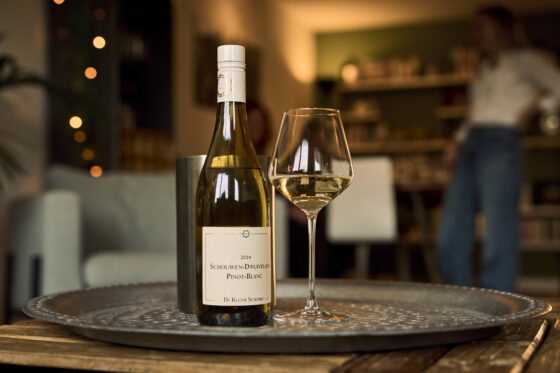
On the Netherlands’ southwest coast, Zeeland’s wines show strong maritime influence and pair perfectly with the region’s seafood. De Kleine Schorre’s flinty Auxerrois would make a fine match for oysters, while its hint of residual sweetness would also complement spicy dishes. Alternatively, try their Pinot Blanc for a lesson in crisp minerality, a touch of salinity and high-acidity gooseberry flavours that mellow into peaches and cream as the wine opens up.
Brabant: biodynamic innovation
With a similarly southerly latitude but inland, Brabant benefits from being slightly warmer than many other Dutch provinces. Which is one reason why it’s home to Wijngoed Wolf: a fully biodynamic, certified organic vineyard that produces some of the country’s most innovative wines made from hybrid grapes like Johanniter and Souvignier Gris. Think zesty Pét-Nat, amphora-aged Sauvignac, and textured orange wines. It’s hard to pick a favourite, and they sell out every year – so if you spot one of Wolf’s wines, snap it up fast.
Gelderland: riches from the river delta
Part of the Rivierenland BOB, Betuws Wijndomein uses cool-climate hybrid grapes to make some seriously complex wines. Try their Lingerood Cuvée Signature: made from grapes like Regent, Cabernet Cortis and Cabernet Noir, it spends around 12 months ageing partly in new oak barriques. The result is impressive: dark fruit and spices, proper tannins and a long finish – a Christmas dinner wine if ever there was one.
Friesland and the Waddeneilanden: a sparkling surprise
The most northerly vineyard in the country, Frysling makes a range of wine styles – but it’s their traditional method sparkling that really stands out. My favourite is the Brûswyn Johanniter: after 30 months ageing on its lees, the wine combines crisp apples and pears with soft brioche and a creamy mousse.
On the island of Texel, Wijngaard de Kroon is the only vineyard on the Waddeneilanden, and as far as I know its wines are only available direct from the source. That said, if you do happen to be on Texel, it’s worth a trip – and a taste! I enjoyed De Kroon’s sparkling Secco rosé, which purports to be semi-dry but is really barely off-dry. Pomegranate and cranberry meet grassiness and salinity in this very drinkable aperitif wine.
Where to buy Dutch wines
Because of their low production volumes, Dutch wines can be quite hard to get hold of. I sourced most of these wines from Vindict and Bilderdijk Wijnhuys in Amsterdam, or direct from the producers themselves. But there are of course specialist wine shops in other cities that stock some Dutch wines, plus you can order many online from Nederlandse Streekwijnen.
If you’re interested to learn more about Dutch wines, you can book a tasting with Vicky! And for more of her wine recommendations and grape explorations, follow @TrufflesandTannins on Instagram or subscribe to The Wine Edit on Substack.
Thank you for donating to DutchNews.nl.
We could not provide the Dutch News service, and keep it free of charge, without the generous support of our readers. Your donations allow us to report on issues you tell us matter, and provide you with a summary of the most important Dutch news each day.
Make a donation