The Dutch must invest €150 billion for their long-term future
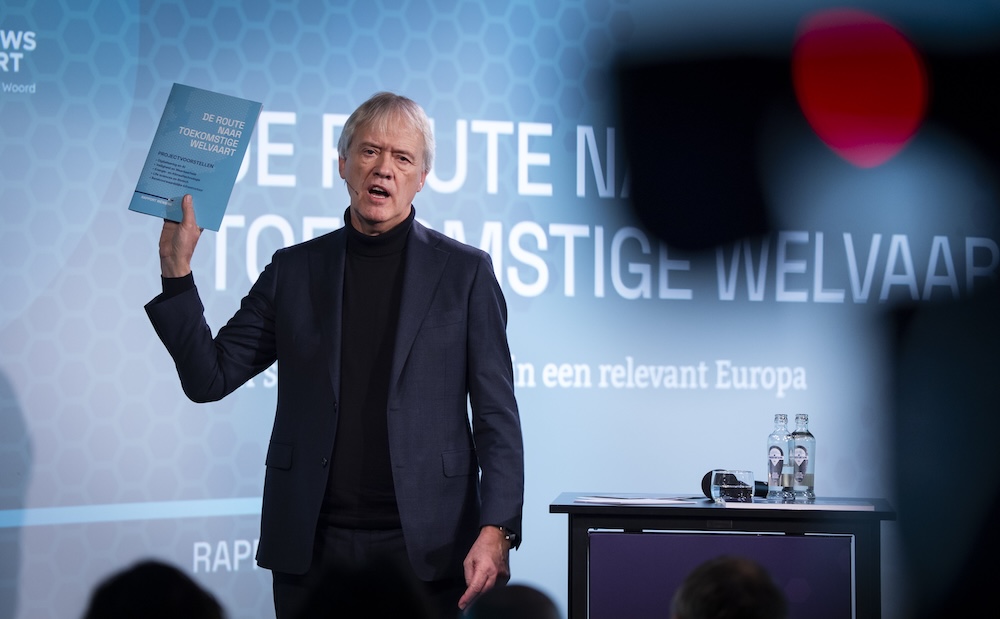
The Netherlands must focus on the long term and improve its investment climate or risk falling behind amid geopolitical tensions, rapid technological change and growing pressure on public services, according to a report by former ASML chief executive Peter Wennink, drawn up on behalf of the economic affairs ministry.
“Dark clouds are gathering over society” and Dutch prosperity is beginning to erode, Wennink said at the presentation of the report, which is likely to play a key role in the ongoing coalition negotiations.
The Netherlands must invest now to keep up, he argues, calling it a matter for the next prime minister personally. The report follows an earlier study by Mario Draghi, in which the former ECB president concluded that Europe is lagging far behind the US and China.
The former ASML boss points to forecasts by the government’s economic think tank, the CPB, showing structural growth falling to 0.9% a year, which he says is insufficient to maintain current public services.
To raise growth to 1.5%, investments of between €151 billion and €187 billion are needed, most of which should come from the private sector, he said.
The problem, he says, is that the Netherlands has under-invested in innovation for 20 years, relies too heavily on low-productivity sectors and services, and lacks a climate for disruptive activities.
Growth of 1.5% to 2% is impossible, he says, with an economy in which “staffing agencies, slaughterhouses and cleaning companies make up an ever larger part of our economy”.
Wennink calls for major investments in four domains: AI and digitalisation; biotechnology and healthcare; defence; and energy and climate. An investment bank should channel public and private capital towards high-quality technology start-ups, and the next government should also create an agency for disruptive innovation, he said.
Public funding for some of the policies, says Wennink, should come from spending cuts, scrapping inefficient tax measures, allowing higher public debt and selling state shareholdings, including in ABN Amro and other state-owned companies.
In addition, he believes social security needs reform, including reducing employers’ obligation to continue paying wages during illness from two years to one, and making it easier to sack people.
Coalition talks
Many of the recommendations are in line with manifesto pledges made by D66 and the CDA ahead of the national elections, both of which focused on long-term investment.
D66, the CDA and the pro-business VVD are currently negotiating to form a new coalition cabinet, with a deadline to reach a deal by the end of January.
Thank you for donating to DutchNews.nl.
We could not provide the Dutch News service, and keep it free of charge, without the generous support of our readers. Your donations allow us to report on issues you tell us matter, and provide you with a summary of the most important Dutch news each day.
Make a donation