Month ban looms for Uber Eats in Amsterdam for illegal riders
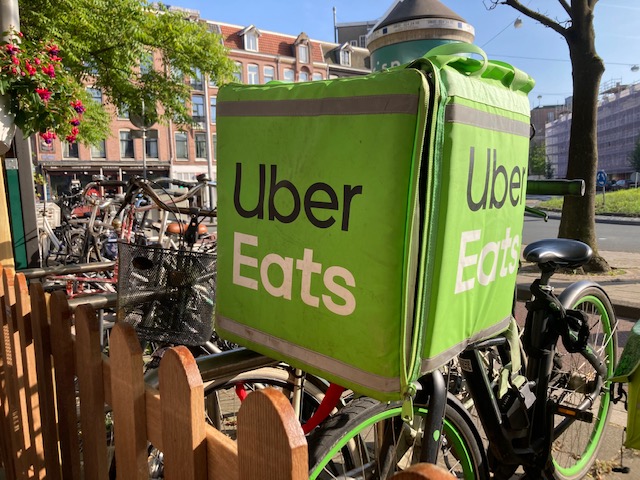
More than half of the Uber Eats couriers whose work permits were checked during inspections in recent years were working illegally, according to figures from the labour inspectorate.
The findings have led the ministry of social affairs to consider temporarily shutting down the delivery platform in the Amsterdam region, the NRC has reported.
The labour inspectorate wants to take action against Uber Eats, accusing the company of taking too relaxed an approach to preventing people without valid work permits from delivering meals, the paper said.
The proposed measure would involve a month-long “preventive suspension of activities” in the Amsterdam area, during which no deliveries would be allowed.
During a hearing at the Council of State administrative court earlier this month, a ministry lawyer said Uber Eats had for years given authorities an overly positive picture of its control systems, allowing undocumented couriers to continue working.
The ministry said the company had been found to be breaking the law on seven occasions since the summer of 2021. Five inspections of Uber Eats couriers found multiple breaches each time, and the company was also fined twice following police investigations.
Meal delivery expanded rapidly in the Netherlands after 2015, when Deliveroo entered the market, followed a year later by Uber Eats. Unlike Thuisbezorgd.nl, both companies initially relied on self-employed couriers paid per delivery.
Since the start of this year, following a string of court cases, Uber Eats couriers have been required to work via temp agencies and are paid by the hour. Thousands are hired in this way, with agencies such as Randstad advertising hundreds of vacancies nationwide.
During the hearing, the ministry said Uber Eats had provided incorrect information to courts and officials about the reliability of its staffing checks. In one inspection this year, five out of ten couriers stopped were found to be working illegally, with identity fraud detected in three cases, the NRC quoted the ministry as saying.
Uber Eats rejected the criticism, saying controls had since been tightened. “Uber is not the problem, the problem is people who commit fraud,” the company lawyer told the court.
Whether the ministry will be allowed to impose a month-long shutdown on the meal delivery service in the greater Amsterdam area remains unclear.
Thank you for donating to DutchNews.nl.
We could not provide the Dutch News service, and keep it free of charge, without the generous support of our readers. Your donations allow us to report on issues you tell us matter, and provide you with a summary of the most important Dutch news each day.
Make a donation