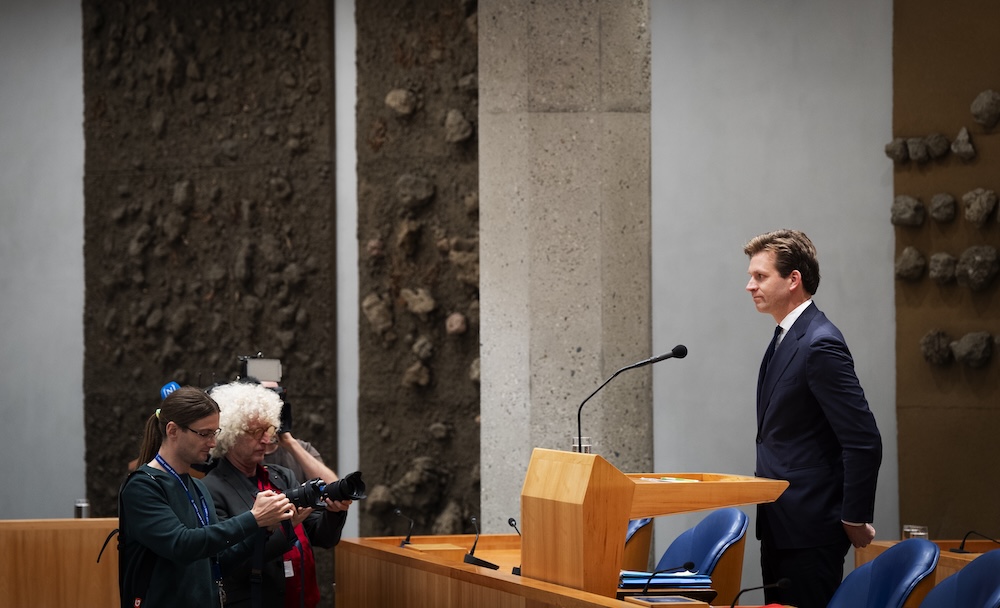
Karremans intervened in the company at the end of September, using a 1952 law that had never been applied before. Nexperia is headquartered in Nijmegen but has most of its production in China.
The Dutch company court removed the company’s Chinese director shortly afterwards. China reacted angrily and imposed a full export ban on Nexperia chips from China, causing panic among European companies that rely on the technology, particularly car makers.
Karremans told MPs during the debate there were no real alternatives and that the only other options were emergency powers and nationalisation. He said he “could already see the newspaper headlines” and decided against them.
Karremans still faced extensive questions about the way the decision was taken. Volt leader Laurens Dassen asked why he had acted without informing the Netherlands’ European partners.
Karremans said he understood the concern but argued rapid action was necessary and that “the circle had to remain as small as possible”. Involving more people, he said, increased the risk of information reaching the wrong people.
Responding to questions on what he knew about the court proceedings and whether he should have waited for them, Karremans said he had no involvement. He also said there was “absolutely no pressure from the Americans”, he said.
MPs across parliament voiced concern about the future of Nexperia and Europe’s dependence on China. Dassen said the case shows “how dependent we have become on China”.
Several parties submitted proposals calling on the cabinet to examine what can be done at a European level. Similar concerns are shared in other EU countries, and the bloc wants to build up its own chip production to reduce reliance on China.
Karremans suspended the intervention at Nexperia in mid-November in an effort to repair relations with China. MPs criticised him for telling the Guardian newspaper shortly beforehand he “would do it all again.”
Karremans acknowledged he “could certainly have handled things differently” and said the interview “worked out unfortunately”.