DutchNews.nl - DutchNews.nl brings daily news from The Netherlands in English 21 May 2026
Newsletter Donate Advertise
  • News
  • Life in the Netherlands
  • Jobs
  • Partner content
  • Podcast
  • Advertise
  • About us
  • Search
  • Home
  • Economy
  • Politics
  • Art and culture
  • Sport
  • Europe
  • Society
  • Environment
  • Health
  • Housing
  • Education
  • News
    • Home
    • Economy
    • Politics
    • Art and culture
    • Sport
    • Europe
    • Society
    • Environment
    • Health
    • Housing
    • Education
  • Life in the Netherlands
    • Latest
    • Opinion
    • Books
    • Travel
    • 10 Questions
    • Learning Dutch
    • Inburgering with DN
    • Food & Drink
    • Ask us anything
  • Jobs
  • Partner content
  • Podcast
  • Advertise
  • About us
    • Donate
    • Team
    • Advertise
    • Contact us
    • Writing for Dutch News
    • Privacy
    • Newsletter
  • Search

Nasal oil gland helps swordfish swim faster, says new study

July 7, 2016

See more Dutchnews articles in your google search results

Add as a favorite source on Google Add DutchNews as a favorite source on Google
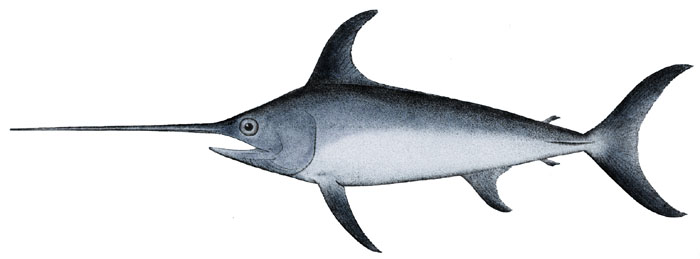
Source: Wikimedia Commons

Dutch scientists have solved the secret of the swordfish’s speed: a gland in its forbidding nose produces go-faster oil.

John Videler, emeritus professor of bionics at Groningen University, told the Volkskrant that he discovered the oil-producing gland when studying the beast at night with MRI scans.

His research, conducted 10 years ago, has just been published in the Journal of Experimental Biology. Using equipment at UMC Groningen hospital – which they freshened up afterwards with forest-scented air spray – he and his students found that the gland was connected to capillaries transporting oil to pores.

‘The oil is distributed from the pores over the front part of the head,’ says the research abstract. ‘The oil inside the gland is identical to that found on the skin and is a mixture of methyl esters. We hypothesize that the oil layer, in combination with the denticles [tooth-like protrusions on the skin], creates a super-hydrophobic layer that reduces streamwise friction drag and increases swimming efficiency.’

Share this article Add DutchNews to Google
  • Facebook
  • Twitter
  • LinkedIn
  • Reddit
  • Copy URL
Uncategorized
Thank you for donating to DutchNews.nl.

We could not provide the Dutch News service, and keep it free of charge, without the generous support of our readers. Your donations allow us to report on issues you tell us matter, and provide you with a summary of the most important Dutch news each day.

Make a donation
Latest
Show more
Asylum riot arrests reveal scale of outside involvement
Dutch slavery toll five times official figure, book argues
Major Dutch banks reverse crypto policies and back EU stablecoin
Close-up of the front of a Dutch fire engine
Industrial site zoned off after asbestos released in fire
Amsterdam issues 2000 emergency supply kits to poor households
NewsHomeEconomyPoliticsArt and cultureSportEuropeSocietyEnvironmentHealthHousingEducation
Life in the NetherlandsLatestOpinionBooksTravel10 QuestionsLearning DutchInburgering with DNFood & DrinkAsk us anything
Partner content
Advertise
About usDonateTeamAdvertiseContact usWriting for Dutch NewsPrivacyNewsletter
© 2026 DutchNews | Cookie settings

Help us to keep providing you with up-to-date news about this month's Dutch general election.

Our thanks to everyone who donates regularly to Dutch News. It costs money to produce our daily news service, our original features and daily newsletters, and we could not do it without you.

If you have not yet made a donation, or did so a while ago, you can do so via these links

The DutchNews.nl team

Donate now

Dutchnews Survey

Please help us making DutchNews.nl a better read by taking part in a short survey.

Take part now